Understanding Different Types of UPVC Windows for Better Ventilation
Most homeowners pick windows for looks. The ones who get it right pick them for how they breathe. UPVC window styles have evolved well beyond aesthetics today, each design serves a distinct ventilation efficiency purpose, quietly regulating airflow optimization, thermal insulation, and indoor comfort without mechanical intervention. Whether it's a kitchen that traps cooking fumes or a bedroom that holds stale air, the right home ventilation window solves it at the frame level. This guide breaks down every major modern window system and which airflow window design actually works for your space, your climate, and your daily life, backed by glazing systems and window profiling built for long-term performance.
Why UPVC Sliding Windows Are Ideal for Compact and Modern Spaces
Where space is limited, every design decision counts. Sliding window systems eliminate the need for swing clearance, making them the most practical space-saving windows for compact apartments, narrow corridors, and balcony sliding windows where outward opening simply isn't viable. A precision sliding track mechanism paired with a smooth roller system ensures effortless operation while maintaining airtight sealing and frame reinforcement delivering full space optimization without sacrificing ventilation or structural integrity.
Benefits of UPVC Casement Windows for Maximum Air Circulation
Few window designs move air like a casement — its side-hinged mechanism swings fully outward, pulling fresh air in directly rather than filtering it through a narrow gap.
Fresh Air Ventilation — Full outward opening captures cross-breezes, delivering superior fresh air ventilation at every angle.
Ventilation Control — Adjustable positions allow precise airflow regulation on demand.
Compression Sealing — Locks frames completely airtight, eliminating draughts and noise simultaneously.
Acoustic Insulation — Sealed closure blocks urban noise without additional treatment.
Thermal Efficiency — Insulated casement systems maintain year-round temperature stability, reducing mechanical cooling dependency.
How Tilt and Turn Windows Improve Ventilation and Indoor Comfort
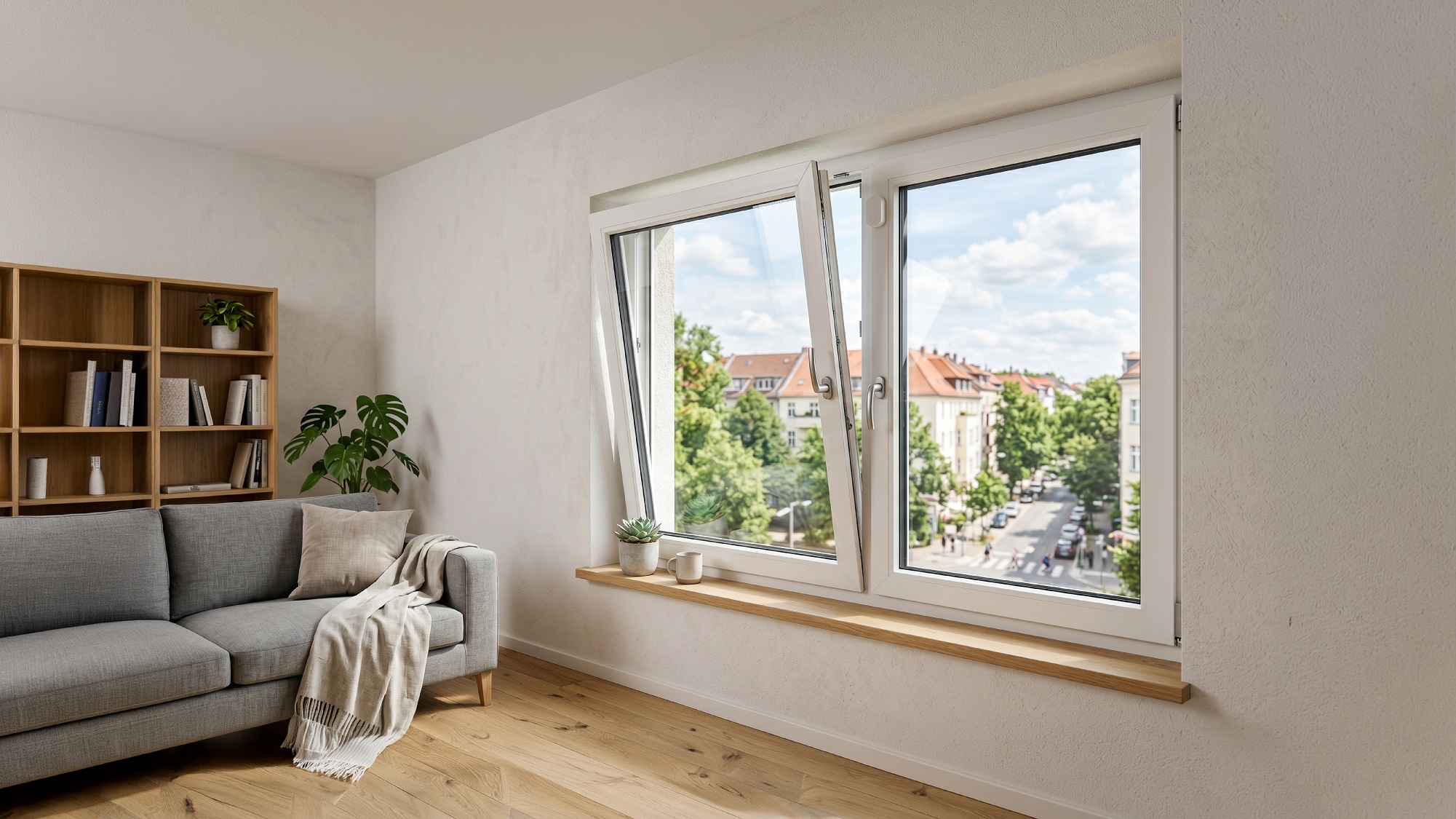
Most windows offer one position — open or closed. Tilt and turn window design breaks that limitation entirely. Dual opening windows tilt inward from the top for gentle controlled ventilation without compromising security, or turn fully inward for maximum airflow — all operated through precision dual-action hardware. The inward opening mechanism makes cleaning effortless, while multi-point sealing and advanced locking technology ensure these secure airflow systems perform as true modern European windows built for intelligent, everyday comfort.
Exploring UPVC Fixed Window Designs for Natural Light and Energy Efficiency
Not every window needs to open — some are built purely to perform. Fixed glass windows eliminate moving parts entirely, channeling daylight optimization and thermal performance through uninterrupted insulated glazing. Panoramic UPVC windows with a fixed frame system maximise natural light penetration while maintaining a complete thermal seal — reducing artificial lighting dependency and supporting energy-saving glazing goals. As structural glazing solutions, these large frame windows deliver breathtaking views alongside serious natural lighting solutions for modern homes.
Choosing the Best UPVC Window Design Based on Room Ventilation Needs
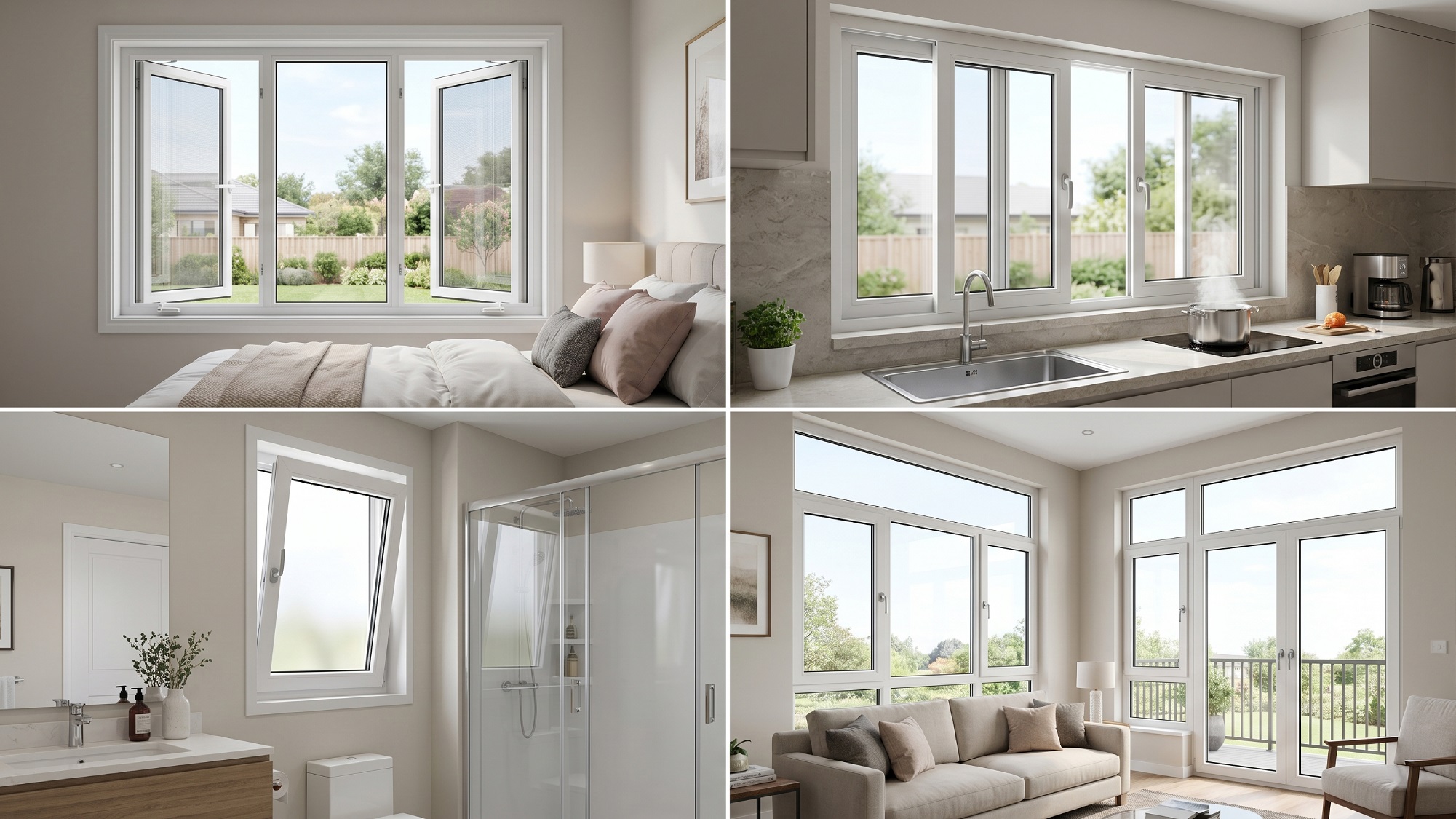
Room airflow planning starts with understanding each space: casements suit bedroom ventilation windows for fresh air and acoustic insulation; kitchen airflow windows demand humidity control through sliding or tilt-and-turn designs; bathroom UPVC windows need consistent cross ventilation to prevent moisture build-up. Matching living room window designs to a deliberate ventilation strategy ensures complete indoor climate management throughout the home.
Comparing Various Open Types in UPVC Windows for Modern Homes
Choosing between ventilation window types is a performance decision, not just aesthetic. Casements open fully for maximum airflow; sliders prioritise air leakage control within the frame; tilt-and-turn adds dual-function versatility through advanced frame engineering. Across every UPVC window comparison, thermal barrier technology and structural durability remain constant — only the best window opening style for your space changes.
Factors to Consider When Selecting the Best UPVC Windows Manufacturers
Not all uPVC windows are equal — and neither are the manufacturers behind them. Profile extrusion technology, galvanized steel reinforcement, and multi-chamber profiles separate quality UPVC windows from ordinary alternatives. Verify fabrication standards, weatherproof sealing consistency, and customisation capabilities before committing. Certified window systems backed by proven premium window profiles and flexible custom UPVC solutions ensure your investment delivers structural integrity, thermal performance, and lasting durable window frames for decades.
FAQs
What are the different types of UPVC windows available for homes?
Common types include casement mechanism windows, sliding track systems, fixed glazing, and tilt and turn technology — each serving distinct UPVC window styles and ventilation needs.
Which UPVC window type is best for better ventilation?
Casements deliver maximum airflow optimization through full outward opening. For controlled cross ventilation with security, tilt-and-turn with compression sealing offers superior ventilation efficiency.
Are UPVC sliding windows better than UPVC casement windows?
Both serve different needs. Sliding windows prioritise ease of operation sealing and space-saving; casements maximise airflow. Your choice depends on room size, opening mechanism preference, and thermal insulation requirements.
What is a tilt and turn window in UPVC window design?
A dual-function design — tilt mechanism allows controlled top ventilation; full turn enables maximum airflow. Multi-point locking ensures security across both positions through advanced European window engineering.
How do UPVC windows improve energy efficiency and indoor comfort?
Thermal insulation, acoustic glazing, and airtight frame technology work together to reduce heat transfer, block noise, and drive consistent energy conservation year-round.