What Are uPVC Glass Windows and How Do They Work?
The first heavy monsoon shower shows quickly whether a window was chosen well. uPVC glass windows work as a system: a frame, glazing and seals that together keep out rain, dust, heat and noise. At VEKA, the starting point is the uPVC profile system, because the frame decides how well the glass can perform.
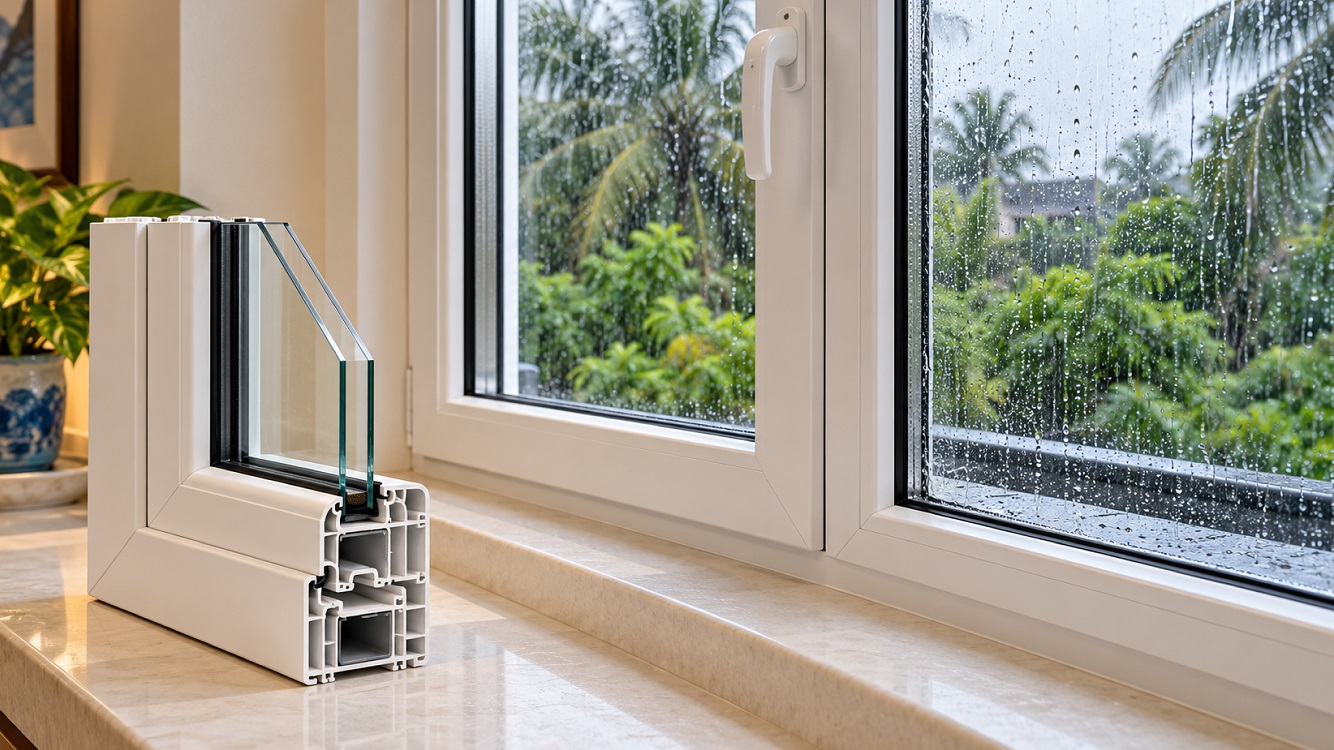
A uPVC framed glass window uses hollow, multi-chambered profiles to hold the glass panels in place. These glass window systems depend on good glazing systems, tight gaskets and a sensible frame-to-glass ratio, which balances daylight against strength. A practical tip: ask to see a cut sample of the profile engineering, not just a finished window.
How uPVC Window Frames Influence the Performance of Glass Windows
The frame does the heavy lifting. Multiple profile chambers slow heat flow, so insulated window frames help rooms stay cooler. Strong uPVC window frames hold their shape under the weight of the glass, and weather-resistant frames do not rust or rot in humid air. Fusion welded corner joints give airtight window frames the airtightness and watertightness that monsoon rain tests hardest.
What to check: Fusion welded corners, continuous gaskets and drainage slots at the bottom of the frame.
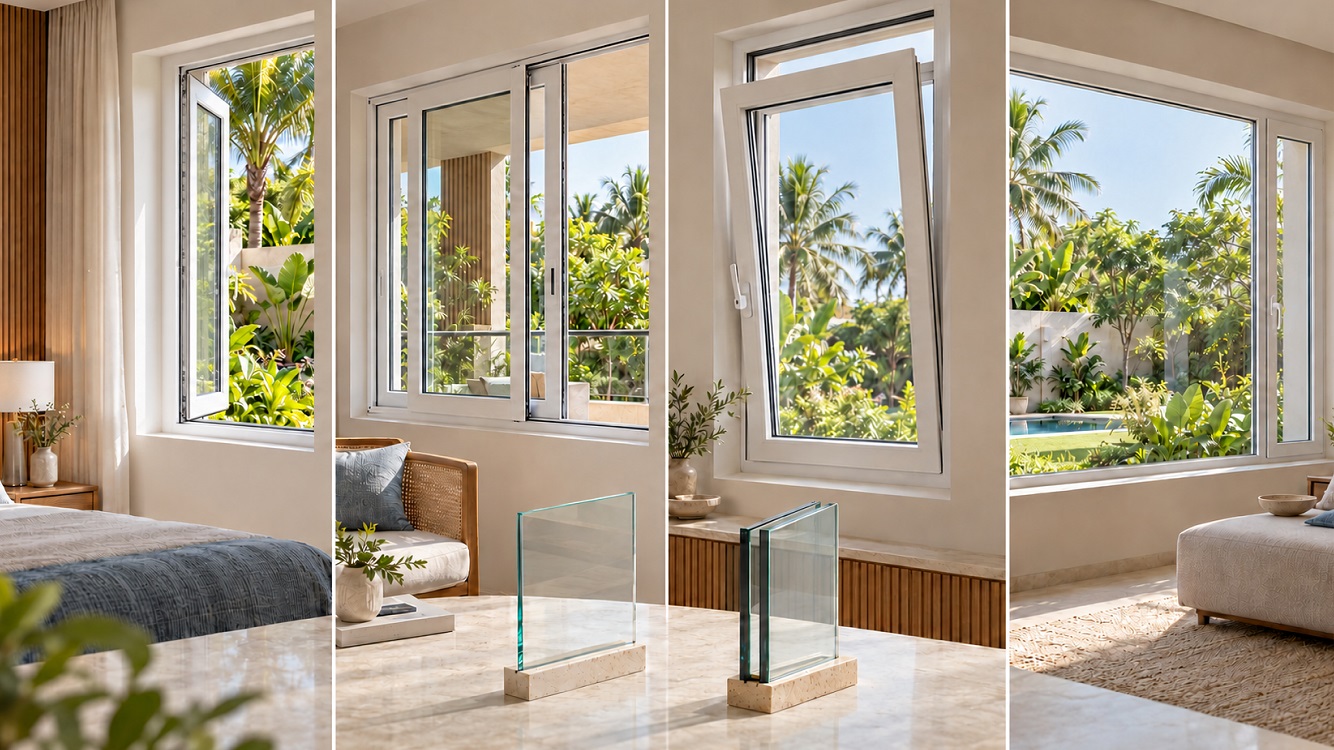
Types of uPVC Glass Windows for Different Home Requirements
- Types of uPVC glass windows differ in how they open, so match them to the room.
- Casement windows: Side-hinged and tightly sealed, good for bedrooms.
- Sliding windows: Save space, so they suit balconies and narrow rooms.
- Tilt-and-turn windows: Tilt for safe airflow, open fully for cleaning.
- Fixed windows: Do not open, best for views and daylight, ideally next to an openable window.
Then choose the glass. Double glazing adds a sealed air gap that helps with heat and noise, while single glazing suits sheltered spots where insulation matters less. Among uPVC window designs for the home, this choice often matters more than the style.
uPVC Glass Window Designs for Better Energy Efficiency and Comfort
Most heat enters a room through the glass, so energy-efficient uPVC windows start with the glazing. Insulated glazing units reduce heat transfer, and low-E glass with a low-emissivity coating cuts solar heat gain without darkening the room. For sun-facing walls, solar control glazing is worth asking about. A lower U-value means better thermal insulation, so air conditioners work less. The same glazing also gives noise reduction near busy roads.
How to Choose the Right uPVC Glass Windows for Your Home
Start with the room, not the catalogue.
- Orientation and climate: Sun-facing walls need stronger heat control than shaded ones.
- Glass specification: Match glazing to heat, noise and privacy needs.
- Profile specification: Choose a frame suited to the window size.
- Ventilation: Plan which windows must open.
- Installation quality: Poor fitting causes air leakage, so ask the VEKA team how windows are sealed and fixed.
FAQs
How does the uPVC frame affect the performance of glass windows?
The frame controls insulation, strength and sealing. Multi-chambered profiles reduce thermal bridging, keep air and water out, and hold the glass stable, so the window performs well and lasts longer.
What are the most common types of uPVC glass windows for homes?
Casement, sliding, fixed and tilt-and-turn windows are the most common choices for homes, usually fitted with either single or double glazing depending on the room’s heat, noise and ventilation needs.
Are uPVC glass windows energy efficient for Indian homes?
They can be, especially with double glazing and low-E glass, which limit solar heat gain. This keeps rooms cooler in hot weather and helps air conditioners work less.
How do I choose the right glass and uPVC frame combination for my home?
Match the glass specification to the window’s orientation and climate, then pick a suitable frame for its size. VEKA’s experts can help with the pairing for your home.
What should I consider when selecting uPVC glass window designs?
Consider window size, style, ventilation, natural light and glazing area. Aim for designs that bring in daylight and fresh air without letting in too much heat.
Need Expert Advice on Choosing the Right uPVC Windows?
🔗 Explore Our Products: uPVC Window & Door Systems
📧 Email Us: crm@veka.in
📞 Speak to an Expert: +91 1800 266 0106