A correctly installed uPVC Casement Window delivers thermal insulation, water tightness, and structural integrity for years — but only when window fitting meets professional installation standards. Across Indian homes — from high-rise apartments in Mumbai and Bengaluru to villas in Hyderabad and independent houses in Chennai — poor airtight installation remains one of the most common post-construction complaints. India's diverse climate zones, including coastal humidity, heavy monsoons, extreme heat, and dusty interiors, make weatherproof windows and energy-efficient windows essential. This guide helps homeowners inspect installation quality, identify common faults, and ensure their uPVC windows perform as expected across every Indian climate and property type.
Signs of a Correct UPVC Window Installation
If you have just received high-quality UPVC windows for Indian homes — whether uPVC Sliding Windows or casement styles — here is what a correct installation should look like:
- Frame alignment is perfectly level and plumb with no visible gaps at the edges.
- Sash operation opens and closes smoothly with no sticking, resistance, or rattling.
- Sealing system is continuous with no breaks or uneven gaps around the frame.
- Fixing anchors are firmly secured into the wall without any movement.
- Expansion gaps are correctly maintained on all sides.
- Window alignment is uniform across all four corners.
Check the Frame Alignment and Finish After UPVC Window Installation
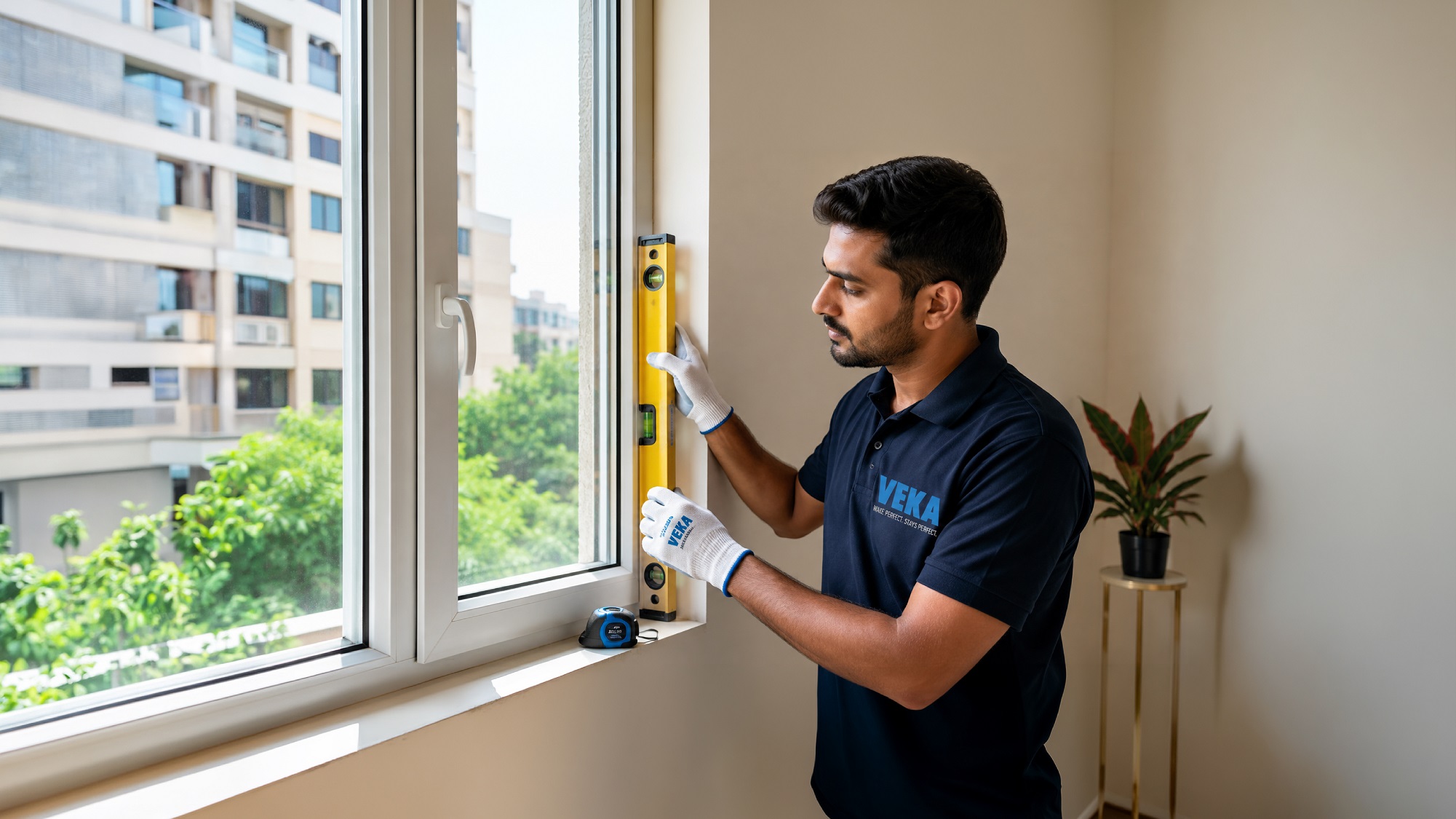
A misaligned frame is one of the most common problems reported after professional UPVC window installation — and one of the easiest to catch early. Use a spirit level — a tool that confirms whether a surface is perfectly horizontal and vertical — to verify window frame alignment in apartments and villa installations alike. Check all corner joints are tightly welded with no gaps or cracks. Fixing brackets must be firmly anchored into structural support without movement, and finishing quality around the perimeter should be clean, even, and free of visible sealant gaps — signs of correct frame squareness and plumb installation.
Test the Operation of High-Quality UPVC Windows After Installation
Operational issues are easiest to fix immediately after installation — not months later. Test every window by opening and closing it fully. The window locking system should engage cleanly with no force. Handle operation must be smooth and firm. Friction hinges should hold the sash in position without dropping. Compression seals must compress evenly when closed, and all hardware components should function without rattling, sticking, or misalignment during operational testing.
How Best Quality UPVC Windows Improve Installation Performance
The quality of the profile determines how well the window performs after installation — not just how it looks on day one. Here is what best quality UPVC windows actually deliver:
- Multi-chamber profile traps air inside the frame — reducing heat transfer and keeping rooms cooler without extra insulation.
- Dimensional stability keeps the frame intact across extreme heat, monsoon humidity, and temperature swings — no warping or shrinking.
- Steel reinforcement inside high-quality window profiles prevents the frame from flexing under wind load or repeated locking.
- Impact resistance in premium UPVC systems protects against rain, debris, and accidental knocks — especially in coastal and high-footfall properties.
- Profile engineering ensures durable window frames fit accurately — leaving no gaps that cause air leakage, water ingress, or rattling.
Final Checklist before Accepting Your UPVC Window Installation
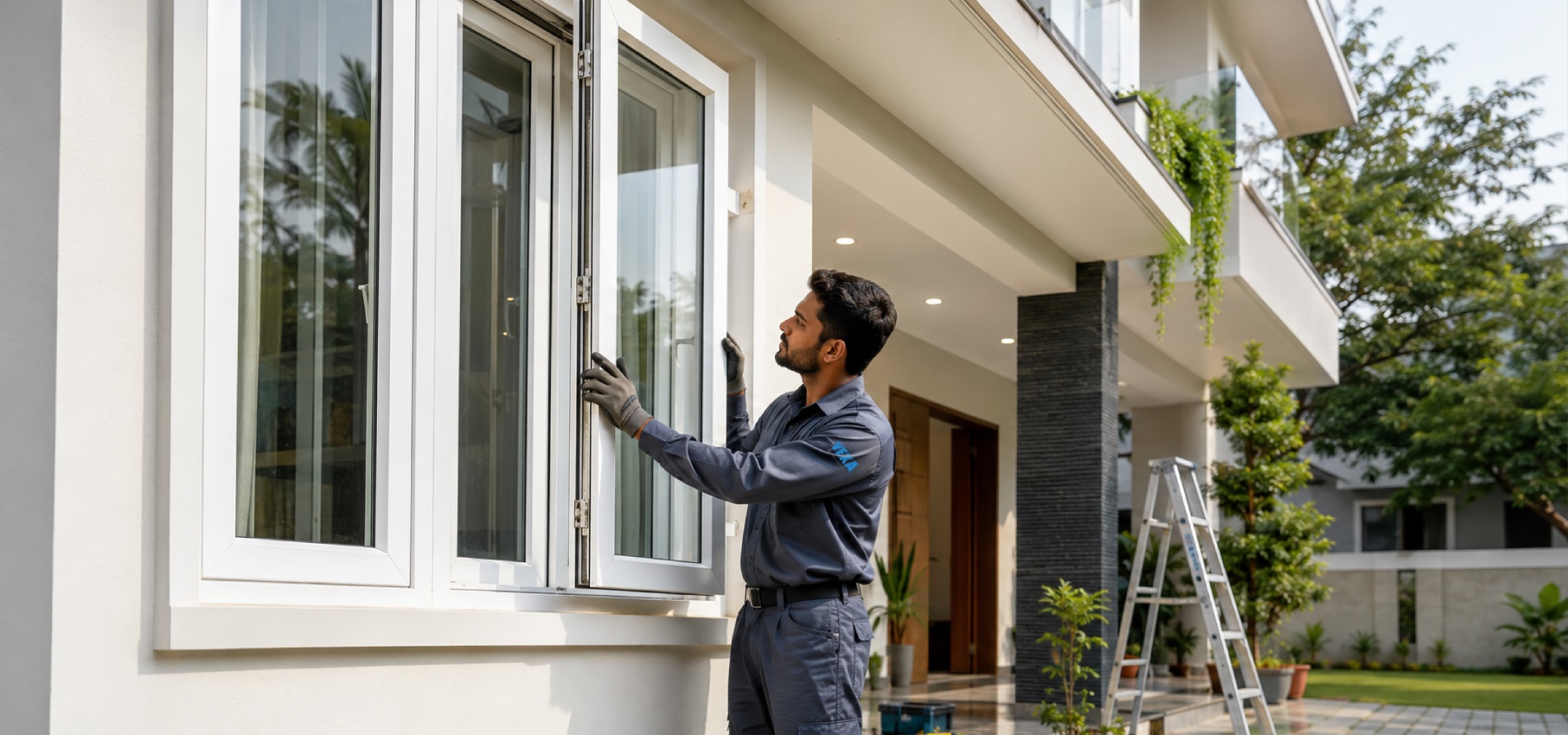
If you are wondering how to inspect newly installed uPVC windows, this handover checklist is your starting point before accepting the installation. This window inspection guide covers all critical quality assurance and compliance inspection points:
Frame and Alignment
- Frame is level, plumb, and square with no visible gaps
- Corner joints are tightly welded with no cracks or separation
- Expansion gaps are maintained on all sides
Operation and Hardware
- Every window opens and closes smoothly without force
- Locking system engages cleanly on all locking points
- Handles and hinges operate without sticking or rattling
Sealing and Waterproofing
- Silicone sealant is continuous with no breaks or gaps
- No air leakage felt around the frame when window is closed
- Drainage slots are clear and unblocked
Glass and Finishing
- Glass is crack-free with no scratches or chips
- Glazing beads are firmly in place with no movement
- Perimeter finishing is clean and even on all sides
Performance Verification
- No water ingress when frame is sprayed with water
- Post-installation inspection signed off by certified installer
If any point above fails — raise it with your installer before final handover and payment.
FAQs
Q1. How can I check if my UPVC window installation has been done correctly?
Check frame alignment using a spirit level, test smooth window inspection of all opening sashes, verify seal integrity around the perimeter, and confirm hardware testing of locks and handles. A proper installation checklist ensures frame squareness and quality inspection before handover.
Q2. What are the signs of best quality UPVC windows after installation?
Best quality UPVC windows operate smoothly without sticking, feature a multi-chamber profile for thermal performance, have robust reinforcement for structural strength, weather sealing that prevents air and water ingress, and a reliable locking mechanism that engages cleanly on every use.
Q3. Why is proper sealing important during UPVC window installation?
Proper sealant application prevents water ingress, air leakage, and insulation gaps that reduce thermal insulation performance. Without continuous weather sealing and moisture protection, airtight windows cannot function correctly — leading to dampness, energy loss, and long-term frame and wall damage.
Q4. How do high-quality UPVC windows improve energy efficiency?
High-quality UPVC windows use a multi-chamber profile that reduces heat transfer and maintains thermal insulation year-round. Airtight construction and insulated window frames prevent air leakage — keeping interiors cooler in summer and warmer in winter, reducing dependence on air conditioning significantly.
Q5. How do I choose the best quality UPVC windows in India?
Look for best quality UPVC windows in India that are performance tested, feature structural reinforcement and profile engineering, meet quality standards for weather and impact resistance, and are installed by certified professionals who follow verified installation quality and handover protocols.
Need Expert Advice on Choosing the Right uPVC Windows?
Explore Our Products: uPVC Window & Door Systems
Email Us: crm@veka.in
Speak to an Expert: +91 1800 266 0106